
ホーム > 書籍詳細ページ
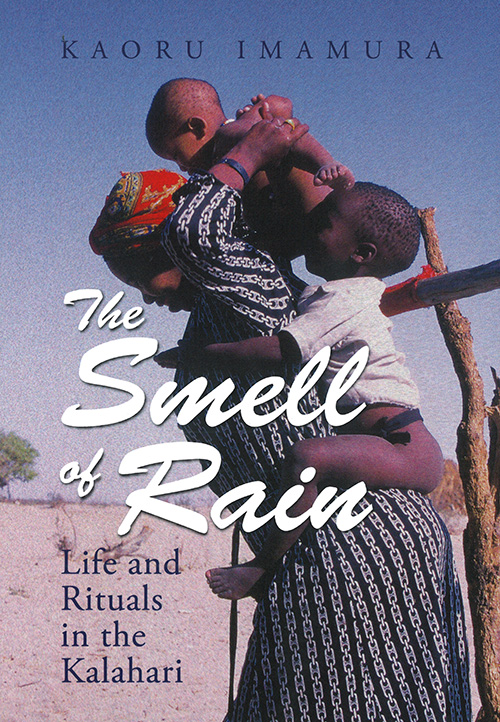
The Smell of Rain
Life and rituals in the Kalahari
A5並製・306頁
ISBN: 9784814006663
発行年月: 2026/08
- 本体: 4,800円(税込 5,280円)
-
在庫あり



"You cannot live with someone who does not share" is the uncompromising social principle of the San hunter-gatherers of the Kalahari Desert, for whom sharing extends far beyond food. It encompasses bodily space, ritual practice, material goods, actions, ideas, and relationships. Sharing is not generosity - it is the very condition of living together.
This system has no written laws, no formal authority, and no reliance on fear or sorcery. What sustains it is a clear-eyed engagement and a disciplined refusal of excess attachment.
Based on long-term fieldwork beginning in 1988, an anthropologist who lived among the San offers a vivid ethnographic account of their world, with particular attention to the lives of women.
In an age of relentless consumption, this portrait of desert life invites us to reconsider what it truly means to live well together.
This system has no written laws, no formal authority, and no reliance on fear or sorcery. What sustains it is a clear-eyed engagement and a disciplined refusal of excess attachment.
Based on long-term fieldwork beginning in 1988, an anthropologist who lived among the San offers a vivid ethnographic account of their world, with particular attention to the lives of women.
In an age of relentless consumption, this portrait of desert life invites us to reconsider what it truly means to live well together.


Kaoru Imamura is Professor in the Faculty of Contemporary Social Studies at Nagoya Gakuin University, Japan. She received a PhD from Kyoto University (1992) in Ecological Anthropological Studies.
Her research focuses on the natural resource use and lifestyles of people in arid regions, such as San hunter-gatherers of the Kalahari Desert, the Tuareg camel nomads of the Sahara Desert, and the Kazakh pastoralists of the Central Asian steppes.
Her research focuses on the natural resource use and lifestyles of people in arid regions, such as San hunter-gatherers of the Kalahari Desert, the Tuareg camel nomads of the Sahara Desert, and the Kazakh pastoralists of the Central Asian steppes.

Introduction
Part 1: Experiences of Living in the Wilderness
Chapter 1 Separating in the dry season, reuniting in the rainy season
Chapter 2 The day I danced Eland – The life of women
Part 2: Sharing Natural Resources
Chapter 3 Gathering activities
Chapter 4 Hunting methods
Chapter 5 Cooperation and sharing among the San from the perspective of women’s activities
Chapter 6 Aspects of synchronized behaviors
Part 3: Sharing Bodily Resources
Chapter 7 Rites of passage
Chapter 8 Extramarital relations and local perspectives on human reproduction
Chapter 9 Tensions in social relations and rituals
Part 4: From Nature to Systems
Chapter 10 An overview of the sharing system
Epilogue
References
Index
Part 1: Experiences of Living in the Wilderness
Chapter 1 Separating in the dry season, reuniting in the rainy season
Chapter 2 The day I danced Eland – The life of women
Part 2: Sharing Natural Resources
Chapter 3 Gathering activities
Chapter 4 Hunting methods
Chapter 5 Cooperation and sharing among the San from the perspective of women’s activities
Chapter 6 Aspects of synchronized behaviors
Part 3: Sharing Bodily Resources
Chapter 7 Rites of passage
Chapter 8 Extramarital relations and local perspectives on human reproduction
Chapter 9 Tensions in social relations and rituals
Part 4: From Nature to Systems
Chapter 10 An overview of the sharing system
Epilogue
References
Index

 ご購入方法について


